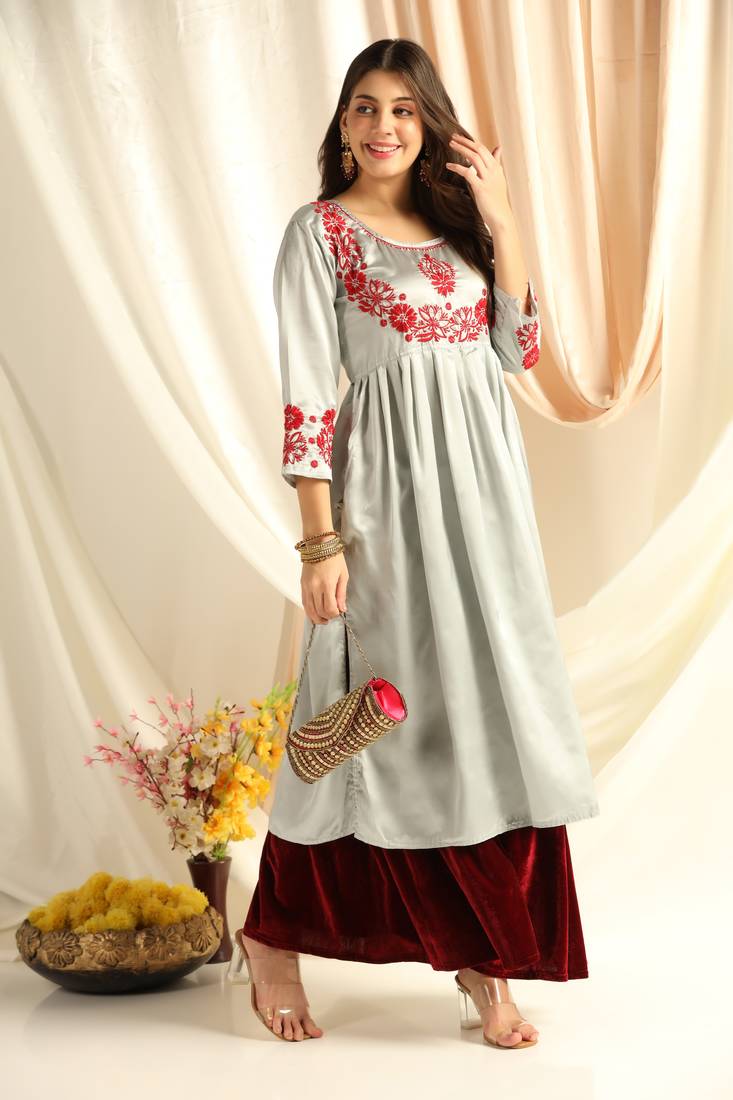
In a world brimming with mass-produced fashion, the timeless elegance of handcrafted Chikankari kurtis stands out as a breath of fresh air. Rooted in the rich tapestry of Indian culture, these kurtis are not just garments; they are wearable art. Each stitch tells a story, each design carries a legacy. This article delves into the enchanting world of Chikankari kurtis, exploring their history, craftsmanship, and how they have become a fashion statement that resonates with contemporary style.
The Legacy of Chikankari
Originating from the city of Nawabs, Lucknow, Chikankari is a traditional embroidery form with a history as intricate as its designs. Legend has it that this art form was introduced by Noor Jahan, the Persian-born wife of Mughal Emperor Jahangir. It flourished under royal patronage, and over centuries, evolved into an emblem of Lucknawi culture. Chikankari is not just a craft; it’s a heritage passed down through generations, a story woven into fabric.
Craftsmanship in Every Thread
The creation of a Chikankari kurti is a labor of love. Artisans, often women from local communities, painstakingly hand-embroider the fabric using a variety of stitches. Each stitch, from the flat and delicate ‘Tepchi’ to the knotted ‘Phanda,’ adds a unique texture and dimension to the fabric. The process, from designing to stitching, can take weeks or even months, depending on the complexity of the design. This slow, careful crafting process ensures that each kurti is unique, a distinct piece of art.
Styles and Patterns: A Melange of Elegance
Chikankari kurtis come in a plethora of styles, patterns, and colors. From classic white that reflects the purity of the craft to vibrant hues that celebrate modernity, there’s a Chikankari kurti for every mood and occasion. The motifs used are often inspired by nature, Mughal architecture, and Persian influences, ranging from simple floral patterns to intricate jaali work. The versatility of Chikankari makes it suitable for formal wear, casual outings, and even bridal trousseaus.
Sustainable and Ethical Fashion
In an era where sustainable fashion is gaining importance, Chikankari kurtis stand out for their eco-friendly and ethical production. The handcrafted nature of these garments ensures minimal environmental impact compared to factory-produced clothes. Moreover, buying Chikankari kurtis supports local artisans and helps keep this ancient craft alive, contributing to the livelihoods of communities that have been practicing this art for generations.
Styling Chikankari Kurtis: A Blend of Tradition and Modernity
The beauty of Chikankari kurtis lies in their versatility. They can be styled in myriad ways to suit different tastes and occasions. Pair them with palazzos or a chic skirt for a modern look, or wear them with traditional churidars to embrace their classic charm. Accessorize with statement jewelry for a festive look, or keep it minimal for a day out. In winters, layer them with jackets and shawls to create a fusion aesthetic.
Preserving the Craft: Challenges and Opportunities
While Chikankari is celebrated for its beauty, the artisans behind this craft often face challenges. The rise of machine embroidery and cheaper imitations pose a threat to the authenticity and survival of traditional Chikankari. Awareness and appreciation of the art form, along with fair pricing and support for the artisans, are crucial for preserving this exquisite craft.
Conclusion: More Than Just Clothing
Handcrafted Chikankari kurtis are more than just clothing items; they are a symbol of cultural heritage and artistic expression. By choosing to wear a Chikankari kurti, you are not just making a fashion statement but also supporting an age-old craft and the artisans who keep it alive. In a world of fast fashion, a handcrafted Chikankari kurti stands as a testament to the enduring charm of slow, thoughtful artisanship. Wear it, cherish it, and carry a piece of Indian heritage with you every day.
 Stylish Me